
In the fast-paced world of modern manufacturing, where meeting tight deadlines and scaling production capacity are critical to competitiveness, IO (Intelligent Operation) forming machines have emerged as a transformative solution—slashing production time by an impressive 50% compared to traditional forming methods. These advanced systems redefine efficiency through the integration of smart automation, precision engineering, and streamlined workflows, enabling manufacturers across automotive, aerospace, HVAC, and industrial sectors to accelerate output without compromising quality. For businesses grappling with high-volume orders and shrinking lead times, IO forming machines have become an indispensable tool for unlocking unprecedented productivity gains.
Traditional forming processes—including manual operation, mechanical stamping, and basic hydraulic presses—are plagued by inefficiencies that extend production cycles. These methods rely on manual setup, repetitive operator interventions, and sequential processing of tasks, leading to prolonged cycle times. For example, a single component forming task that requires tool adjustments, manual loading/unloading, and quality checks can take minutes to complete with traditional equipment. Additionally, traditional machines often require separate setups for different forming operations, forcing manufacturers to move components between multiple workstations—a time-consuming process that increases the risk of delays and errors. For high-volume production runs, these inefficiencies accumulate, resulting in extended lead times and missed delivery targets.
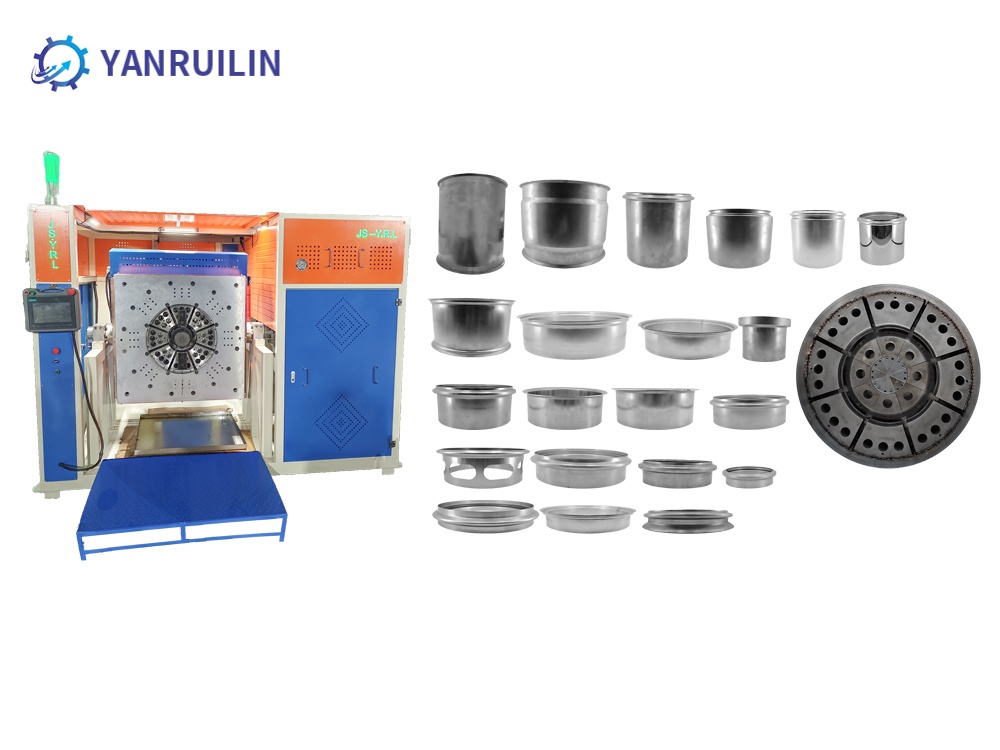
IO forming machines address these bottlenecks through a combination of intelligent automation and integrated workflows, cutting production time in half. At the core of their efficiency is the integration of CNC technology and adaptive programming, which eliminates the need for manual setup and adjustments. Operators can program complex forming sequences—including multi-step operations—in a single interface, with the machine automatically adjusting tooling, pressure, and positioning to match specifications. This reduces setup time from hours to minutes, enabling rapid changeovers between different component designs and production batches. For manufacturers handling high-mix, high-volume orders, this flexibility translates to significant time savings, as the machine can seamlessly switch between tasks without disrupting workflow.
Another key driver of time reduction is the parallel processing capabilities of IO forming machines. Unlike traditional systems that handle one forming operation at a time, IO machines incorporate multi-station designs that perform multiple tasks simultaneously. For example, a single machine can integrate flaring, beading, and dimensional inspection in a single pass, eliminating the need to transfer components between workstations. This parallel processing cuts down on handling time and reduces the risk of bottlenecks, with cycle times for individual components dropping from minutes to seconds. In high-volume production environments, this translates to hundreds or thousands of additional components processed per shift—directly contributing to the 50% reduction in overall production time.
Automated material handling further amplifies efficiency gains for IO forming machines. Many systems integrate robotic loading/unloading arms, conveyor belts, or automated feeders that eliminate manual component handling. This not only reduces the time spent on repetitive tasks but also minimizes the risk of human error and fatigue-related delays. For example, an automated feeding system can continuously supply raw materials to the machine, while a robotic arm removes finished components and places them in storage or next-stage processing—all without operator intervention. This continuous workflow ensures that the machine operates at maximum capacity, with minimal downtime between cycles.
Real-time process monitoring and adaptive control also play a critical role in reducing production time. IO forming machines are equipped with advanced sensors and IoT (Internet of Things) connectivity that track every aspect of the forming process—from tool wear and material feed rates to dimensional accuracy. This data is analyzed in real time, with the machine automatically adjusting parameters to optimize performance. For example, if the machine detects a slight deviation in material thickness, it can instantly adjust pressure or speed to maintain quality, eliminating the need for manual adjustments or rework. This proactive approach reduces downtime caused by defects or equipment malfunctions, ensuring that the machine operates at peak efficiency throughout production runs.
The durability and reliability of IO forming machines further contribute to time savings. Built with robust components and wear-resistant tooling, these machines are designed to withstand continuous industrial use, minimizing unplanned downtime for maintenance or repairs. Predictive maintenance features—powered by data analytics—alert operators to potential issues (such as tool wear or mechanical stress) before they cause breakdowns, allowing for scheduled maintenance that avoids disrupting production. This reliability ensures that the machine operates consistently, with minimal interruptions to workflow.
The 50% reduction in production time delivered by IO forming machines has far-reaching implications for manufacturers. For businesses, this means faster order fulfillment, enabling them to meet tight delivery deadlines and gain a competitive edge in the market. It also allows manufacturers to scale production capacity without increasing labor costs or floor space, as the same machine can process twice as many components in the same amount of time. Additionally, the reduced production time translates to lower operational costs, as energy consumption, labor hours, and overhead expenses are minimized per unit produced.
As manufacturing continues to evolve toward Industry 4.0 and smart production, IO forming machines are well-positioned to remain at the forefront of efficiency innovation. Advancements in AI-driven process optimization, machine learning, and integration with broader factory automation systems promise to deliver even greater time savings in the future. For manufacturers seeking to keep pace with growing demand and rising competition, investing in IO forming machines is a strategic decision that unlocks tangible productivity gains—proving that intelligent automation is the key to reducing production time and driving long-term success.
In a manufacturing landscape where time is money, IO forming machines demonstrate that efficiency and quality can go hand in hand. By cutting production time by 50%, these advanced systems empower manufacturers to do more with less—accelerating output, reducing costs, and maintaining the high standards of quality that customers demand. As the industry continues to embrace smart technology, IO forming machines will remain an essential tool for businesses looking to thrive in a fast-paced, competitive market.
Este sitio web utiliza cookies para garantizar que obtenga la mejor experiencia en nuestro sitio web.

 English
 Pусский
 Deutsch
 日本語
日本語 한국어
한국어 Italiano
 Türk dili
 हिन्दी
 Indonesia


Comentario
(0)